MY AMERICA

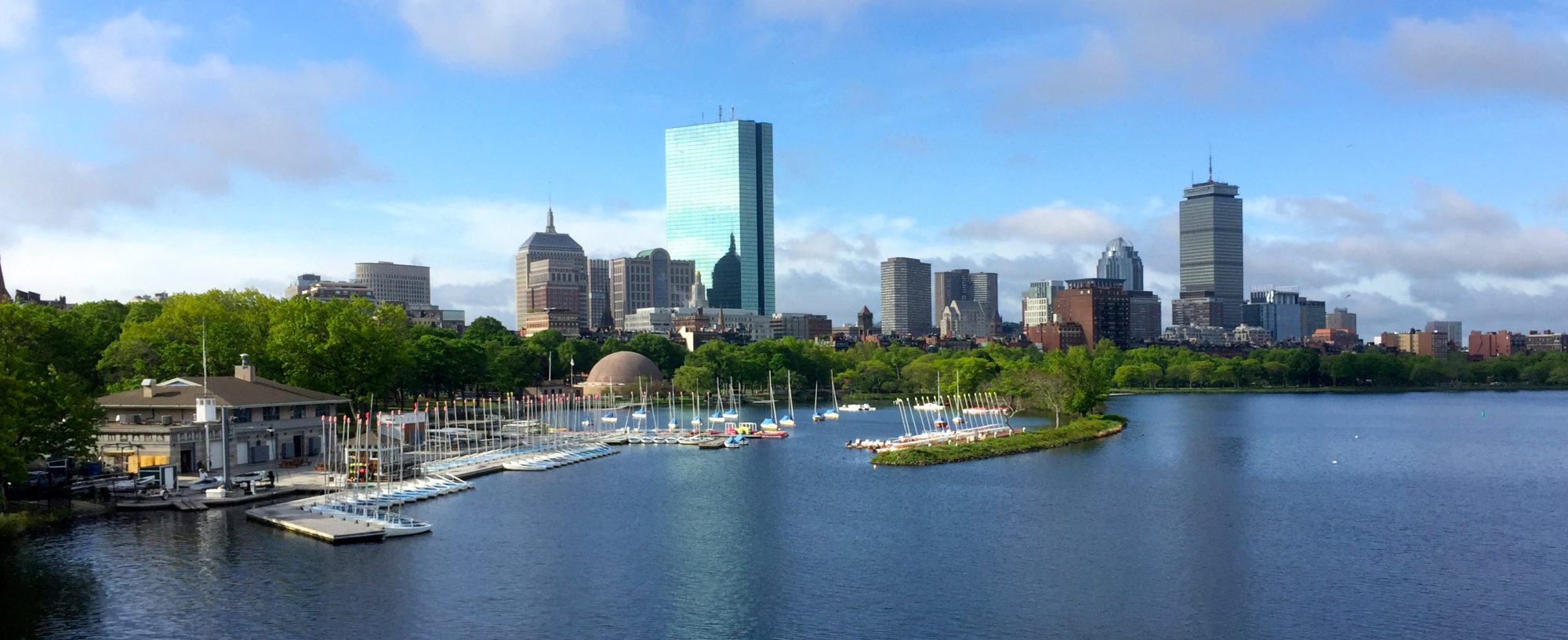
During the last 6 months, I’ve traveled all across this amazing place called the United States. From Atlanta to Dallas. From Tampa Bay to New York and Philly. From Boston to Austin and on the Portland. A few thoughts on those travels:

We have an amazingly beautiful country that is spectacularly diverse in its beauty. From the sugar white beaches of Florida’s Gulf Coast to the roses and rhododendrons on steroids in Portland’s Washington Park. From Boston’s post-card worthy North End to the powerful grandeur of the Texas State Capitol. From the ever-expanding Manhattan skyline to the time-honored Atlanta experience of a morning run through Piedmont Park. Back home where I live and work, I experience joy and pride whenever I grab a water taxi ride on Baltimore’s sparkling Inner Harbor, or when I end my workday in Washington with a run on the Mall that takes me past the glorious new Museum of African American History. America is so full of so much beauty in so many forms. We all need to get out every day and remind ourselves of how gloriously special is each of our United States.

We are better than the people occupying our halls of government. Mind you, it’s our fault for sending them there. But, I don’t believe their actions and words and deeds reflect how most Americans feel about their fellow citizens. In my own experience, whether traveling in a red state or a blue state or a purple state, I always encounter warm smiles, friendly greetings and gracious hospitality. Still, we’re being led at the margins of extremism through a complete breakdown of even the barest modicums of civility and social discourse. I haven’t taken a poll, but I don’t think most Republicans hate me because I’m gay. Conversely, I don’t believe most uppity, over-educated liberals disdain you because you’re devoutly Christian. Rural people are not more patriotic than their urban cousins, and city dwellers don’t have all the answers. We all lead different lives with different struggles. And, we all need to own up to our role in this demise of civility. We all need to think hard about the politics of destruction because we actually really, really need each other in order to sustain this great experiment in democracy. Otherwise, we’ll end up just another balkanized former empire.

We must address the gaping hole of income inequality in the United States or we will not survive as the leader of the world’s developed nations. Whether in Austin or Portland or Boston, I see dangerous signs of a post-first world (i.e., third world) society in which cities are populated either by tech millionaires or chronically mentally ill homeless people. The struggling, dwindling middles classes are unhappily relegated to the soulless suburbs, which are breeding grounds for extremist views. Sound familiar, London? Paris? Mexico City?

Ours is an amazingly beautiful country. But, we gotta stop hating each other because of what separates us. Otherwise, we’ll kill the beauty that unites us.

THE STAIN ON MY FAITH

I grew up Catholic. And, this Memorial Day weekend featured two events around that faith – remembering my devoutly Catholic, Irish father on the occasion of his 90th birthday and binge-watching the new documentary series on Netflix, “The Keepers,” which tells the story of an investigation into the yet-unsolved 1969 murder of Sister Catherine Ceznik, who was a beloved teacher at a local girls’ high school in Baltimore run by the Roman Catholic Archdiocese of Baltimore. I’m not giving away the story when I say that the investigation at the heart of “The Keepers” also leads to allegations of sexual abuse and cover-up by the Church.

Both my parents were devout Catholics from baptism to death. My mother attended an all-girls Catholic high school in Rhode Island and my father was an usher at our local parish church throughout my childhood in Florida. He even played football for the local Providence Knights of Columbus league back in the 1950s. Both my brother and I attended Catholic schools during our elementary years until a job loss meant my parents could no longer afford the tuition.

Roman Catholicism is an ancient Western religion of more than a millennia and comprised of millions of wonderfully faithful citizens across the globe who live (and have lived) their lives in faithful service to God. Many Catholic teachings are based on guiding principles I hold dear – the love and compassion for our fellow humans, forgiveness, charity, care for the sick and the poor and, in many cases, a fight for social and equal justice. So, I imagine it would be deeply disappointing for my late parents to hear me describe myself as a former Catholic.  But the hierarchy of the Church has left a stain on my faith.

And, two things must happen before I would ever consider returning to the  Church, neither of which seems likely in my lifetime. First, the hierarchy and political leadership of the Church must immediately cease the systematic denial of what is today an immutable and irrefutable fact. The Roman Catholic Church has presided over, acquiesced to, been complicit in and covered up one the largest, most despicable sex crimes in history – the wholesale sexual abuse of thousands of boys and girls for decades and throughout the world. How many more exposes must appear, how many more settlements must be announced and how many more lives must be damaged or lost before the Church leadership acknowledges this terrible fact?

Google “Catholic Church sex abuse” and you can read a long (but probably not exhaustive) list of settlements in the United States just since the 21st Century began.  It totals more than $1.2 billion and involves compensation to nearly 2,000 victims. In one single settlement, the Archdiocese of Los Angeles agreed to pay out more than $600 million to hundreds of victims. Several large dioceses have declared bankruptcy as a result, including Portland and San Diego. Yet, the allegations continue.  And, these settlements involve just the victims who were brave enough to come forward and who courageously withstood attempts to silence them, to intimidate them, and to humiliate and victimize and traumatize them all over again through the criminal investigative and civil litigation processes.

Going forward, I believe the Church must respond to any allegation of sexual abuse in only one way: to treat the allegation not as an internal matter but as a potential violation of the criminal laws of the jurisdiction in which the alleged crime took place. It must cooperate fully and transparently with local law enforcement and prosecutorial authorities to bring any alleged perpetrators of child sexual abuse to justice. Like any other defendant, priests and nuns are entitled to due process, access to counsel and a presumption of innocence until proven guilty. But, nothing more.

Secondly, it’s time to have a robust and honest conversation about the perverse ministerial structure of the Church, which requires priests and nuns to live cloistered lives that deny them the full rule range of adult experiences, including normal human sexuality and identity. This is not a faith-based doctrine. It is a politically and financially advantageous structure, the logical and moral support for which has long passed. Worse, it has come at the terrible cost of creating a perverse and toxic environment that has put thousands of often-vulnerable young people worldwide at terrible risk.

It’s time to come out from behind the cloak of power and wealth and ancient tradition and an army of gimlet-eyed lawyers to answer the faithful this very basic question: How will the Church protect our children? Until that question can be answered satisfactorily, I will continue to mourn the fact that the men (most definitely not the women) who run the Catholic Church left my values, not the other way around.

ONE DAY IN PHILADELPHIA

Living along the Northeast Corridor between Boston and Washington at times feels like one long traffic jam. But, living so close to other major East Coast cities also makes for lots of quick, fun escapes. And, one of my favorites is underrated yet very worthy Philadelphia, the nation’s fifth largest city. Sometimes, we make a long weekend out of it, but it’s also fun to just spend a day exploring Philly’s many charms.

From my home in downtown Baltimore, I can hop on a train and, in little more than an hour, be walking the City of Brotherly Love’s narrow, historic streets, which today are very alive and chocked with fantastic food, art and shopping. What’s so great about Philadelphia is the way it manages to offer all the attributes of its nearby siblings – the history of Boston, the big city vibe and grittiness of New York and the monumental grandeur of Washington – all in a compact, easily navigable core.

My day in the city starts at its fabulously Art Deco 30th Street train station, located just across the Schuylkill River from Center City. Just out the doors and to the west in University City is the sprawling Ivy League campus of the University of Pennsylvania, which is its own self-contained urban college town. Today, however, we’ll be heading in the other direction to downtown and further east to Old City.

Our first stop is a quick snack at one of the world’s great city markets. Since 1893, the 100+ businesses at Reading Terminal Market have been selling everything from fresh seafood to cookbooks to Amish farm produce fresh in from Lancaster County to renditions of the city’s famous cheese steak hoagie. But, a personal favorite are the well-worth-the-wait and insanely decadent donuts from Beiler’s (the salted caramel is truly life-changing). In Philadelphia, it’s all about the food. There are so many outstanding dining choices, from fancy to not.

Now we have calories to burn.  So, I make my way from Reading Terminal past the stunning Second Empire City Hall, which is topped with a statue of founding father William Penn, to one of the city’s perfect squares. Penn’s original plan for Philadelphia created an orderly grid of streets running between the Delaware River on the east and the Schuylkill on the west. He punctuated this plan with four large squares, including one of the best urban green spaces in the country, Rittenhouse Square.

Today, the streets radiating from this square are lined with luxury condos, high-end shopping and many dining options, including two outstanding French offerings, Rouge and Parc. But, today, I’m dining with a close friend a few blocks away near Broad and Locust on fresh fish and Greek specialties at Estia, a specious taverna just around the corner from the city’s theater district and the Kimmel Center for the Performing Arts.

Later on, I have an early dinner date with another friend but, in the meantime, there’s an afternoon to kill. Next up in the Museum District is the fantastic Philadelphia Museum of Art, which sits majestically at one end of Benjamin Franklin Boulevard and along the banks of the Schuylkill. From blockbuster exhibitions to its own enormous permanent collection, this is one of the world’s great art museums. Its steps are familiar to movie buffs for their role in the film, “Rocky;” there’s even a selfie-worthy statue of the pugilist with a dramatic view back toward Center City. In addition to the museum, this district also is home to the Rodin Museum, the Franklin Institute for Science and the Barnes Foundation, which houses an amazing collection of Impressionist art.

Philadelphia has no shortage of luxury accommodations and, even if you’re just here for the day, that also means lots of great hotel bars in which to take a break. A favorite of mine is the luxuriously paneled lobby bar at Le Meridien, which faces City Hall to the north. Their “French martini” features Chambord and pineapple juice and it’s as tasty as it sounds.

My dinner plans are in Old City, down by the Delaware and under the Ben Franklin Bridge to New Jersey. I arrive in the neighborhood a little early and check out several really cool, local boutiques lining the razor-thin streets.

Sugarcube on North 3rd Street, just above Market, offers hip renditions of modern classic clothing and accessories for men and women, while its neighbor across the street, Lost and Found, has both new and vintage clothing for sale. Summer is on the way, so a linen plaid shirt and lightweight trousers seem like good souvenirs. Now, it’s time to head to my final event of my day in Philadelphia, dinner with a former colleague and good friend who now works in the city.

We meet at Farmicia, a buzzy restaurant that focuses on local, seasonal ingredients. Their menu includes fresh pastas and several interesting cocktail options. My friend and I secure a great table in the window and enjoy a nice catch-up visit while enjoying a delicious meal and some good people watching. We say our goodbyes and I jump in a Lyft to 30th Street Station for my return train. I am back home in Baltimore by 9:00 p.m., just in time to get ready for a new workday after a nice little break.

There are lots of ways to enjoy Philadelphia – from history to art to dining to shopping to sports to culture.  Whatever your interests or plans and no matter how much time you have, rest assured that you will eat well in Philadelphia and you will find lots of fun.

FAIR IS FAIR, GUYS

That there should be any continuing disagreement about equal pay for women is offensive to me.  And, it should offend anyone who believes in fairness and equality and, frankly, productivity.  The rolling back of President Obama’s equal pay orders is further evidence of efforts to force women (and minorities) back to 1957 and beyond. Among other setbacks, the ability to again force women with sexual harassment claims into mandatory arbitration allows employers to get away with their intimidating misdeeds and leaves victims with no real options for real and toxic acts of discrimination.

As for equal pay, I’ve been practicing law for almost 25 years and some of the very best lawyers I have worked with – and for – have been women.  They certainly did not deserve less pay than me.  And, their family circumstances are irrelevant.  You’re paid to do a job based on the requirements of the position and your relevant skills.  Not based on some hierarchical and patriarchal view of a woman’s “appropriate” role in her family or society.

Practicing in a more fully represented and more diverse profession has made me a better lawyer. I’m not afraid of a truly competitive environment for professional and business opportunities.

What are you so afraid of guys?

http://www.nbcnews.com/news/us-news/amp/trump-pulls-back-obama-era-protections-women-workers-n741041?cid=eml_onsite

A WOMAN’S POINT OF VIEW

My mother died in 2010, two years and two months after she entered the hospital for emergency surgery in December 2008. She never would spend another night in her own bed. During that long odyssey, I shuttled back and forth between Baltimore and Jacksonville as she encountered a successive parade of complications that exacerbated her COPD. This resulted in Mom bouncing from hospital to rehabilitation center to nursing home and back again. My brother was on the ground to visit her every day and take care of her home. As the lawyer in the family, I dealt with admission agreements, several conversations about when or whether to withdraw life support and healthcare coverage. Or, rather what happens when healthcare coverage runs out.

Turns out, you can exhaust your lifetime of Medicare coverage before you die (at least you could back in 2010). That landed my mother in state-directed Medicaid land. In order to pay for my mother’s last three months of nursing care, she had to be indigent, which meant that the State of Florida took all of my mother’s (and late father’s) Social Security payments. She got to keep $35 a month. My brother and I took care of running her house.

My mother was a kind and loving and generous and bright and beautiful woman. Thanks to her and my father, my brother and I never wanted for much – new clothes every new school year, a Catholic education, trips to the beach and nearby Disney World (we were in Orlando, after all). But, she was afraid and anxious for most of her life. As a child of the Depression who grew up in a single-parent household, she was always afraid of not having enough money.   A bookkeeper and a cop, my parents never had much money – I doubt they ever made more than 40 grand. I vividly remember the look of fear on my mother’s face when, as a fourth grader, my father sat my brother and me down after mass one bright Sunday and told us that he had lost his job as a security officer and we would have to leave our Catholic school. We survived that chapter but my mother was always afraid of what could happen or might happen. In the end, she was afraid to die, too. She held on for months longer than I would have, had I been in her place.

I suppose that, had my mother not had Medicare and, later, Medicaid, I would have maxed out credit cards and taken on other debt to pay for her care. But, that would have only bought just a few months. Even with a good job with health insurance, I would not have been able to pay the cost of my mother’s long goodbye in a hospital bed at the rate of about $60,000 a month. Who could, really? According to our President and Republicans in Congress, however, that’s exactly what should happen. Or, as they might say, it sucks for you to be poor.

Earlier this week, social media featured a photo of a bunch of all white male members of Congress sitting around a conference table and discussing what healthcare coverage women could do without. Later in the week, as TrumpCare was imploding, it became clear that the so-called “Freedom Caucus” wing of the Republican Party would stand for no remains of the Affordable Care Act’s expanded coverage. Why? Well, if you ask Rep. Ted Yoho (R.-Fla.), who happens to represent the district where my mother lived and died, he had this to say on NPR: “I do not believe that the federal government role is to provide health care for the individual. I don’t look for anybody to pay for health care for me and my family (sic). That’s my responsibility.”

Talk about alternative facts. Mr. Yoho and his fellow members of Congress don’t pay for their healthcare. Like most of us who are lucky enough to have employer-provided health insurance, members of Congress pay hugely subsidized premiums for coverage that, in turn, pays for most of the astonishingly high costs of healthcare services, treatments, prescriptions and hospitalizations. And, Congress has some of the most subsidized healthcare insurance of all. If we all had to pay the actual amount on those explanations of benefits we receive from our insurance companies, a lot more of us would be in bankruptcy. Or dead.

And, that seems to be the goal. These privileged (straight, white, male) members of Congress, who move through life with a rank sense of entitlement, don’t want expanded healthcare for women and children and the poor. Especially poor women and children who are minorities. They don’t care because their narcissism allows them to believe that anyone who struggles with poverty or lack of health insurance deserves their fate. I guess Jesus wants them to die, early and unnecessarily. They also don’t care because, as men, it’s never been their concern. Privileged, straight, white men have it pretty good, despite all their ranting about the demise of real America. They’ve never had to worry about racism, bigotry, an unwanted pregnancy (including through sexual assault), or caring for sick children or sick parents while also trying to hold down a job where they make less than their male counterparts. These concerns are just made-up liberal noise to them.

I was very lucky to grow up in a house where my father shared the burden of financial and other struggles with my mother. But, all too often, it’s left to the women to figure it out. To work a miracle. To be in two places at the same time. To put their dreams on hold for someone else.

It’s time to come clean. You can dress it up with America and Freedom and Liberty all you want but opposition to expanded, affordable healthcare coverage is nothing more than the callous indifference of wealthy privileged Americans (both men and woman) who are just fine if their poorer fellow citizens suffer needlessly through the lack of health insurance. I believe that if more women were leading Congressional discussions on healthcare, we’d have a better shot at coming up with a plan that could address the philosophical objections of some while also maintaining a shred of basic humanity and common decency. Surely the minimum to be expected from such a great nation as the United States.

In the meantime, I’m just glad my mother isn’t alive today to be thrown out of a hospital bed by her member of Congress.

WHO HAVE WE BECOME?

This is way more than 500 words, but I have a lot to say about anti-Semitism and its brethren.  Google “anti-Semitism” and you’ll learn that it first appeared in the late 19th Century as an attempt to re-brand Judenhass (i.e., hatred of Jews in German), presumably to recast such vulgar views in more politically scientific terms. In 1879, a German journalist who helped give anti-Semitism currency, Wilhelm Marr, wrote a pamphlet called “The Way to Victory of Germanicism over Judaism,” in which he accused Jews of being liberals and a people without roots who had Judaized Germans beyond salvation.

Nearly 140 years later, the front page of Sunday’s Washington Post featured a lead story of how the Netherlands’ far-right Freedom Party and its leader, Geert Wilders, could wind up the top vote-getter (that doesn’t mean he’d necessarily become Prime Minister) in this week’s national elections. Wilders, who was recently convicted of hate speech, wants to totally ban Muslims from living in Holland and routinely refers to Moroccans living in the country as scum. According to the Post, and despite Holland’s wealth, prosperity and humming economy, his message is resonating with the Dutch across all sectors of society; these are the same people who hid Anne Frank and her family while suffering greatly under the Nazis. Similar campaign strategies are playing well in France and Germany as we speak.

Two weeks ago, at a fintech conference on faster payments in Atlanta, I sat next to a London lawyer who tried to explain to me why so many people in England had voted for Brexit. He claimed that the open borders of the European Union had made it too easy for citizens from poorer member EU states to come to the United Kingdom and take good-paying jobs away from Her Majesty’s “native” subjects. Because immigrants were willing to work for less, the solicitor explained, all these maids from Poland had overrun the British hotel housekeeping business. Somehow, I had missed that the powerful British economy had been brought to its knees by an invasion of tidy Polish women.

Much like our own Trump-up, there are striking parallels in each of these alarming narratives. A common yet dangerously potent message underlies all nationalistic playbooks, whether from today or 1879. Voters are ramped up beyond any connection to fact or reality with the dangerous rhetoric of “us first,” which is to say that native, majority, white Christian people are under attack from within their own borders by minorities who look different or pray differently or speak differently. Everyone who is different is an enemy or a potential enemy. Whether at a Trump rally in Florida or in a village in Yorkshire or on the streets of Amsterdam, this populist message is frustratingly and frighteningly (to me) effective at stoking our fears against each other.

But, I still don’t get why? First and most importantly, I don’t think it works – at least in terms of improving the lives of those who buy into this bigotry.  Now, I suppose one could point to China as a repressive, nationalist society that works, but I assume most of us in the United States still think a free market economy is the way to go.  Assuming that, the numbers never add up. I’ve worked in Washington for nearly 20 years and I can say that no native-born American has ever been let go from cleaning the offices in which I work. Where are all these “real Americans” being forced out of long hours, low pay and physically demanding labor? They don’t exist is the answer.  Perhaps people are looking for any assurances to the fears that plague them.  And, logic and fact seem to play no part. Case in point, a hell of a lot of the estimated 24 million Americans who stand to lose health insurance if and when the Republicans repeal the Affordable Care Act voted for that very thing when they cast their ballot for this President.  Their sole reason for wanting to repeal Obamacare seems to be, drum roll, their hatred of the nation’s first black President.

Could the appeal lie in its tribalism? Surely, that must play a part; we are naturally drawn to people who are like us in some way.  Still, the fact that I love visiting Ireland and happily recall the first time I walked the streets of the Castro in San Francisco doesn’t mean my existence is threatened by standing next to a woman in a hijab on the Metro. Economic insecurity? Of course, I get that fear of one’s own future can make more tantalizing the appeal of anti-Semitism, xenophobia, nativism and any other strain of racism.

Even so, and quite apart from the fact that these campaigns are morally reprehensible, history shows pretty definitively that a movement built on racial superiority (in whatever form) is doomed to fail. Every time. So, why does this demagoguery continue to work?

The answer must lie with the politicians and their quest for naked power and wealth.  These “leaders” and their advisors stand to gain much – politically and financially – through hate-filled campaigns while the voters stand to lose much (more).  It’s patently obvious that this Republican administration doesn’t care about the economic struggles of Americans any more than Geert Wilders or Marine LePen are looking out for struggling Dutch and French families, respectively. Rather, these politicians see nationalism, in all its anti-Semitic, xenophobic, racist glory, as their path to unchecked power and a financial windfall. In consolidating power while demonizing everyone who is different, these strong-men and -women want to silence any discord or protest, raking in the dough and deluding their followers into believing that only they, these would-be dictators, can save the “true” people from the infidels among them.

In the end, many will suffer as a result of the hatred and prejudice brought by these campaigns while their supporters will only end up broke. Not to mention morally bankrupt.

History does bear repeating.  This is a lose-lose proposition if ever there was.

GRATITUDE

I’ve been engaged in focused direction lately. That is, focused on redirecting my anxiety and fears over the many dark turns our country has taken in recent weeks into positive, proactive actions. Whether it’s writing letters or attending events or speaking out or writing checks, I am trying to respond to the autocratic direction of our new President by creating an opportunity for more thoughtful and more impactful engagement and resistance.

But, sometimes, I hit the wall. The news crawl (I don’t actually watch or read much news anymore) sends me into a loop of dystopian hopelessness. As I was sharing this with my therapist last week, he responded with an assignment. Spend part of every day being grateful. His point was much of life is a distance race, so I need to pace myself on negativity or I run the risk of dropping out and checking out.

So, here goes. I’m grateful I decided not to bail on a Match.com date 3.5 years ago because I would have missed meeting my partner. He is a wonderful, handsome, kind and creatively brilliant man who has made me a better person. I am enormously grateful for him. I am grateful for my friends and family. Diverse and interesting and sprinkled across the globe, each of these wonderful humans inspires and supports and loves me without question.

I am grateful for a rewarding professional career. For nearly 9 years, I have been fortunate to work alongside some of the most talented and dedicated professionals in Washington as we play our roles in my agency’s mission to ensure public confidence in the nation’s financial system. My colleagues inspire me to learn more and do more and to always be open to seeing things through someone else’s perspective.

I am grateful for the animals in my life. Yes, I am a crazy cat person. But, my pets ground and calm me. Their uncomplicated love and affection allows me to recharge and reflect after a bad day so that I am able to face my fellow humans for another day.

I am grateful for the gift of travel. With every trip and each adventure, I am reminded of what a big beautiful world this is. Whether traveling across an ocean and just over the state line, each destination offers its own version of beauty and connection. Travel also reminds me that there are wonderful, kind and generous people everywhere, and that we are so much more alike than we are different.

Lastly, I am grateful for the gifts of knowledge and age. My own path of learning has given me knowledge that on my best days allows me to improve the world around me. Age has given me courage. I no longer fear offense as much as I fear failing in my obligation to speak up, to provide the counterpoint and to hopefully be part of the solution, not the problem.

I am grateful for this and more.

WHAT’S IN A NAME?

The website Conservapedia defines a “liberal” as a person who “craves” more government and supports “the censorship and denial of Christianity.” Wow. Those people sound awful. Yet, I always thought a liberal was more like the Merriam-Webster definition: a person who is broadminded and “not bound by authoritarianism, orthodoxy, or traditional forms.”

Back in the summer of 2008, I drove across America and learned a lot about one famous liberal. On the morning of June 6, I left Sioux Falls, South Dakota and headed west on I-90 to Mount Rushmore, which is about 5 hours on the other side of the state. As ominous thunderstorm clouds loomed mid-morning, I made the serendipitous stop in Mitchell, a farming town of 12,000 and perhaps most famous as the home of the Corn Palace, a Moorish-style building with an exterior made entirely of corn. Mitchell also was – for many decades of his life – the home of South Dakota native, former U.S. Presidential candidate, longtime U.S. Senator, nutrition advocate and unapologetic liberal George S. McGovern.

Searching my non-satellite radio dial, I tuned in to South Dakota Public Radio just as it was interviewing the then-86-year-old, former Sen. McGovern on the anniversary of the 1968 assassination of Robert F. Kennedy, Jr.  40 years and one day earlier, McGovern was among the last people to see Kennedy alive. Kennedy had been campaigning with McGovern to win the South Dakota presidential primary, which he did. Later that day, Kennedy flew to Los Angeles where he would be murdered some 24 hours later after winning the California primary. As I drove out of Mitchell, I listened to McGovern tearfully recount getting a telephone call in the middle of the night and learning that Bobby, with whom McGovern had just celebrated the day before on a South Dakota airport tarmac, had been assassinated. He spoke of his shock and grief, and described turning to Eleanor, his wife of 64 years, and how they wept for the Kennedy family and for the nation.

Who was this icon of American liberalism? McGovern was born in 1922 in the tiny farming town of Avon, South Dakota, the son of a Wesleyan Methodist minister, but grew up in nearby Mitchell. He was a shy kid who ran track and became a debate team champion, although he and his debate partner did lose one fateful competition to his future wife and her twin sister. He was patriotic. Upon hearing of the Japanese attack on Pearl Harbor, McGovern and some college friends drove to Omaha, Nebraska, and enlisted. He would serve as a decorated fighter pilot during WWII, flying several missions over Germany.

McGovern earned a degree from Dakota Wesleyan University and his Ph.D. from Northwestern. Although not a farmer himself, throughout his life he was interested in food and nutrition and their connections to poverty. McGovern was first elected to the U.S. House of Representatives in 1957. Between 1961 and 1962, he served as President Kennedy’s Director of Food for Peace. In 1962, McGovern was elected to the U.S. Senate from South Dakota and would serve until 1981. During the Vietnam War, McGovern traveled there and became a very outspoken critic of the U.S.’s involvement, which infuriated many. That probably led to the fact that McGovern and his troubled running mate, Sen. Thomas Eagleton, lost the 1972 presidential election to Richard M. Nixon by one of the largest margins ever. He later served as President Clinton’s U.S. Ambassador to the United Nations Agencies for Food and Agriculture.

Throughout his life, McGovern served as a champion for the poor and the hungry. He was inspired by his faith, his connection to the land and his desire to help his community and others in need.  I don’t think he thought Christian and liberal were mutually exclusive at all.  He had many friends across the aisle of politics even as they disagreed with him vehemently on policy positions. In short, this liberal from South Dakota was a hardworking family man who loved his state and his country and wanted to help people.

I personally think liberal is an excellent term.

ST. PETERSBURG – IS IT ON YOUR LIST?

At the beginning of every travel year, The New York Times publishes a list of places you need to visit during the coming 52 weeks.  A few years ago, the Times included St. Petersburg on its list; no, not the one in Russia but its Florida namesake. Really, I thought? Well, a few weeks ago, we spent a glorious weekend here and I can report that St. Pete should definitely be on your list.

Growing up in the Sunshine State in the 70s, no one ever said, “hey, let’s go to St. Pete for the weekend.” It was unflatteringly described as “God’s waiting room” for its near total lack of youth. Today, nothing could be further from reality. While St. Pete has always been possessed of many natural assets, it now offers an impressive menu of dining, entertainment, arts, culture and professional sports, all of which will leave you wanting to return.   Today, this city of about 250,000 is a vibrant and sophisticated anchor of the Tampa Bay metropolitan area, home to nearly 3 million people.

Water and the sun abound here. The city is magnificently situated at the entrance to Tampa Bay, offering both bayfront and Gulf of Mexico shorelines. It usually records more than 300 days of bright sunshine every year and there are miles of gorgeous, sugary white beaches. Plus, lots of small islands and interconnected waterways circling the city make for great boating, sailing and kayaking.

Several impressive museums have helped make St. Pete a real cultural destination. It’s home to the Dali Museum, which houses the largest collection of the Spanish artist’s works outside Europe. The Chihuly Collection features a good chunk of the famous glassblower’s works, while the Florida Holocaust Museum is celebrating 25 years of education and remembrance. Another cultural anchor, the Museum of Fine Arts, hosts frequent exhibitions from its downtown bayfront location, while the Museum of the American Arts and Crafts Movement is slated to open later this year.

There are two basic lodging options when visiting St. Pete – downtown along the bayfront or Gulfside. Regardless of which choice you make, you’ll want to explore the other. We chose the beach option and one of the best hotels in Florida. The Loews Don CeSar Hotel is a giant pink palace built in the 1920s and perched on a spectacular stretch of beach. It features plush yet small rooms (ours came with a balcony), two pools, several bars and restaurants, a full-service spa and lots of gorgeous, art-filled public spaces great for just hanging out. When you consider that cocktails can be delivered to your poolside chair or beachside cabana, there really is no need to ever leave.

But, we did venture out and downtown for dinner. Beach Drive is the main drag facing the bayfront and the city marina. Its blocks are lined with restaurants, bars, art galleries, ice cream parlors and other local shops. Most restaurants have sidewalk seating and it’s a fun and boisterous scene at night with people of all ages out dining, drinking and strolling. For our first meal, Cassis American Brasserie delivered with tasty, classic French and American dishes. On our last night in town, we dined at Tryst, a loud, hip and self-described gastro pub. The drinks were strong and the Florida grouper sandwich was perfectly delicious.

The next morning, as we headed back across Tampa Bay to our flight home, I thought, “there’s more to see here.” Definitely the sign of a city that should be on your list.

Poolside at the Loews Don Cesar.
Gulf of Mexico sunset in St. Pete Beach.


THREE DAYS, THREE HOTEL BARS

Chicago is a fantastic city to enjoy at any time of the year. But, a January visit necessarily means turning to indoor pleasures.   They might call it the Windy City for its blustery politicians, but that doesn’t mean those icy winds off Lake Michigan can’t freeze you in your tracks. Luckily, there are plenty of tempting diversions to keep you off the streets. A full calendar of theater and performing arts, great shopping, outstanding restaurants and world-class museums – it’s all here. Plus, one of my favorite pastimes – checking out hotel bars. On that front, Chicago is definitely no second city. During a recent long weekend, my best friend from law school (who’s a local) and I decided to explore three of city’s hippest and most stylish hotel bars in three days.

Base camp for the weekend – and the home of our first bar – was the Park Hyatt Chicago. Beautifully situated on Michigan Avenue right in the heart of the Magnificent Mile, the Park Hyatt offers understated luxury with a muted, Zen quality. Our super plush room had front row views of the famous Water Tower and Lake Michigan beyond. NoMI is its chill, elegant lounge. Located on the seventh floor of the hotel, it’s a great place to while away a cold, blustery afternoon with good conversation and strong, handcrafted cocktails made by friendly yet polite mixologists. There’s also a full menu to help soak up the booze, including Korean short ribs and lobster rolls.

For a completely different vibe, our second stop was a nightcap in the Mad Men-invoking, hipster hangout that is the Langham Chicago‘s second-story lounge. This luxury chain, which got its start in London, has repurposed a 1970s skyscraper right on the Chicago River into a sleek modern space. That night, we rested on buttery, cognac-colored leather couches next to huge windows overlooking the river. Nearby was a group of well-dressed local ladies perched on Jetsons-like, white leather sofas who – thanks to the acoustics – we could tell were doing an excellent job of appearing to be interested in some blathering, self-appointed Fintech guru. My drink choice was a powerful Manhattan made with locally made, 90 proof Few Spirits Bourbon. This is a distillery with a sense of irony and history; its extremely potent series of gin, vodka and whiskey is produced just over the line in Evanston, Illinois, which was the home of the temperance movement in the early 20th Century (and remains the home of Northwestern University).

Shopping in Chicago is hard work; it’s not easy matching glowers with the ladies of Neiman-Marcus. So, in need of a pit stop, we headed to our third hotel bar of the weekend. Just a short elevator ride up from Nordstrom delivers you to the cool style of The Gwen, a Luxury Collection Hotel, Chicago. Its fifth-floor lobby is well curated with great art and updated yet faithful reproductions of mid-century modern furniture. The lounge is just off the main lobby and has an outdoor terrace for those non-January visits. Our bartender was funny and engaging. He convinced us that we had to try their version of Wisconsin cheese curds, which are basically breaded and deep-fried chunks of cheddar cheese. Ours were served with garlic honey mustard and mine was washed down with a very dry Hendricks Gin martini.

Each of our hotel bar stops delivered on another big three – a friendly Midwestern welcome, comfortable seating and good service. As our weekend drew to a close and we headed home to reality, I had three more reasons to love the city of big shoulders.

Lounge at the Langham Chicago.
City of architecture: the famous Water Tower and John Hancock Building, right in front the Park Hyatt Chicago.